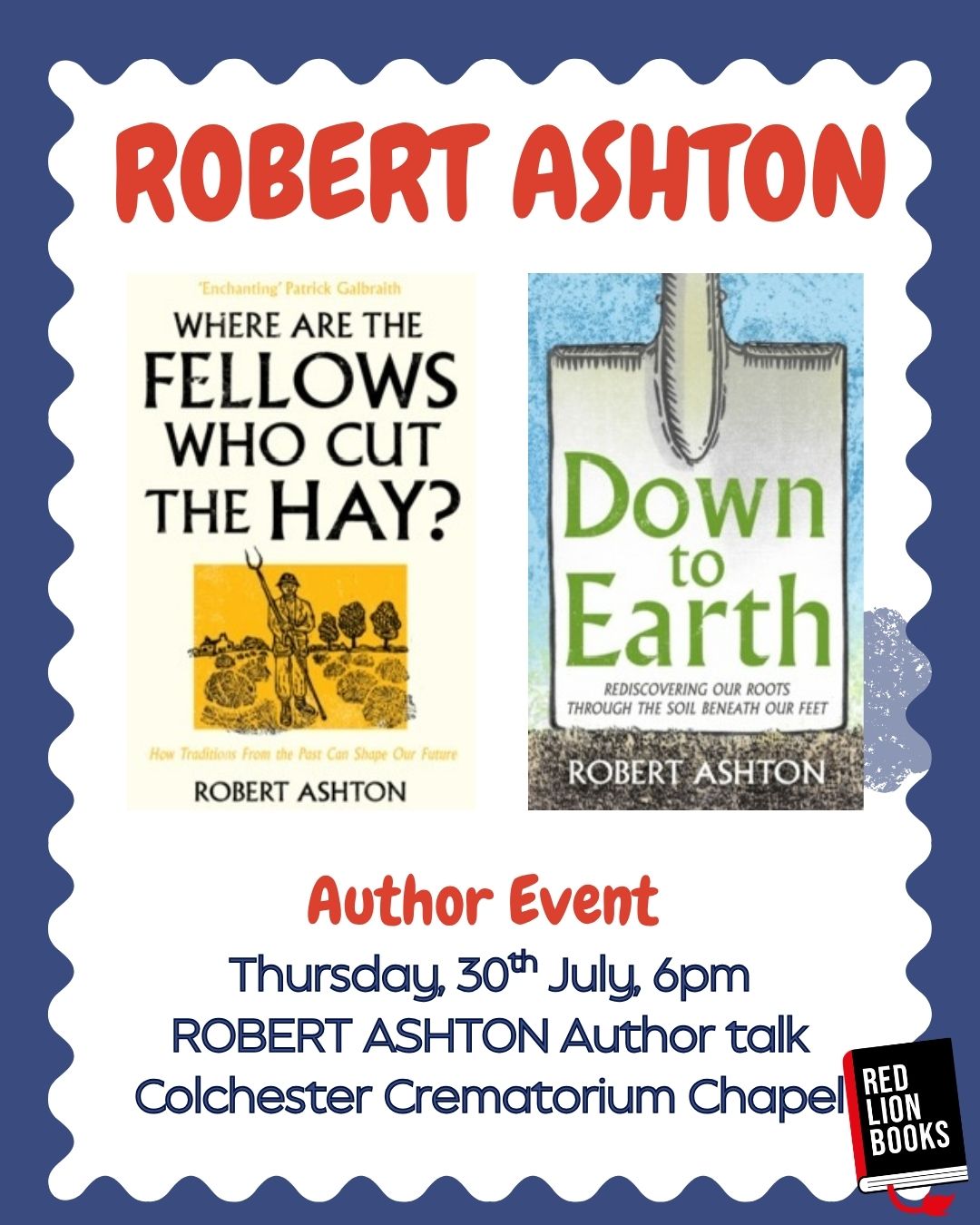
Author Event: Robert Ashton
Price range: £5.00 through £26.00
Thursday, 6pm, 30th July
In person event at Colchester Crematorium Chapel (finished by 7.30pm)
Ticketing options are available with or without one or both books. Pre ordering books offers a saving otherwise books will be available on the evening at RRP
The final chapter in Robert Ashton’s latest book Down to Earth sees him visit Colchester cemetery in search of his great-grandparents’ graves, so the cemetery and crematorium chapel is a fitting setting for what promises to be an intriguing talk about two of his books. Discover how almost forgotten ways are returning in rural East Anglia, and why it is vital that we relearn to respect the ground beneath our feet.
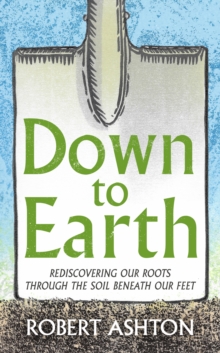
Down To Earth, published in Hardback on 2nd July, RRP £16.99
We rely on the soil and its rich biodiversity for our food, traditions and folklore, but are we guilty of taking it for granted? In Down to Earth, Robert Ashton traces five centuries of human relationships with the soil, from farming and folklore to the modern environmental crisis. In so doing he reveals the wisdom of the gardeners, farmers, gravediggers, archaeologists and naturalists who work with it every day. Each chapter focuses on an aspect of our connection to the earth beneath our feet, seeking to deepen our understanding of its importance and encourage us to take its preservation more seriously.
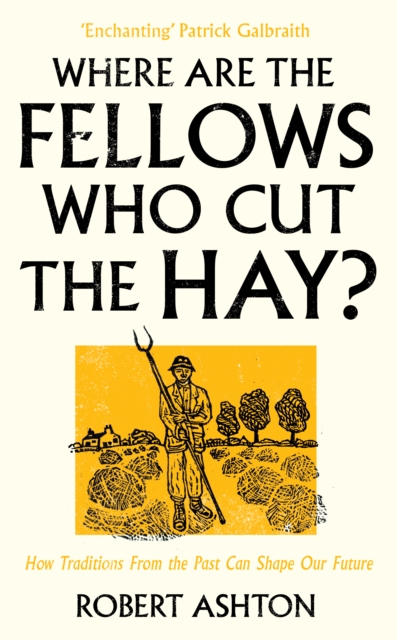
Where are the Fellows who Cut the Hay? published in paperback on 19th March, RRP £10.99
Where Are the Fellows Who Cut the Hay? is an ode to rural life, charting traditions of the past, how they were lost and why we need to reconnect. Exploring the relationship between everyday items and the communities that make them, Robert Ashton provides a snapshot of twenty-first century England. Where are the people who grow barley, milk cows and produce wool? How have their farming methods become less ethical, sustainable and natural over time? And what are we doing today to reverse that change? Inspired by George Ewart Evans’ Ask the Fellows Who Cut the Hay, Ashton gives voice to local people and travels rural Suffolk in search for innovation, interweaving his own personal connection to Evans and to the land. Part memoir, part social history, Ashton’s thought-provoking book is a manifesto for why, against all odds, we need to step back in order to progress.
SHORTLISTED FOR THE NEW ANGLE PRIZE 2025
LONGLISTED FOR THE WAINWRIGHT PRIZE 2024